


While the precise geometry of a mandala can be deeply meditative, there is another side to terracotta art that is just as captivating: Storytelling.
If you have mastered the basics from our Beginner’s Guide to Hand-Painted Terracotta, you know that dot painting is often associated with symmetry. But what happens when you break the grid? What happens when you use those same dots to paint a scene rather than a pattern?
Enter the world of Whimsical Folk Art. In this article, we are exploring the playful, narrative style seen in our popular "Village" collection—specifically the square plates featuring curling trees, crooked houses, and starry skies.
What is Whimsical Folk Art?
"Whimsical" in the art world refers to a style that is playful, fanciful, and full of imagination. It often borrows from Naive Art or Folk Art, which prioritises expression and colour over realistic proportions.
In a realistic painting, a house must have straight walls and a tree must look like a tree. In whimsical art, houses can lean to the side, trees can have branches that curl like ribbons, and the sun can be purple. It is a style that embraces imperfection.
For terracotta pottery, this style brings a sense of warmth and nostalgia. Unlike the serious "Zen" vibe of a mandala, a whimsical village plate feels like a page torn from a fairy tale.
Deconstructing the Design: The "Dream Village"

Let’s look closely at the square plate design featuring the village scene (as seen in our catalogue). This isn't just a random assortment of colours; it is a carefully composed scene using the pointillism technique in a new way.
1. The Tree of Life
The anchor of this design is the large black silhouette of a tree. Notice the branches—they don't grow straight up. They swirl and spiral in exaggerated curls. In art therapy and folklore, this is often recognised as the "Tree of Life," symbolising growth and connection.
- The Technique: Unlike the geometric lines in our Mandala Magic guide, these branches are painted freehand. The dots are then added around the branches to represent leaves or magical energy, often in contrasting colours like bright orange or red.
2. The "Wonky" Houses
The charm of this design lies in the houses. They are not perfect squares. They are tall, narrow, or tilted.
- Colour Blocking: The artist uses solid blocks of bright acrylic paint (mustard yellow, terracotta red, deep blue) to fill the shape of the house first.
- Dot Detailing: Once the solid colour is dry, dots are used to add architectural details—rows of white dots for roof tiles, or tiny yellow dots to make the windows look like they are glowing with light.
3. The Textured Ground
At the bottom of the plate, you will see mounds or hills. Here, the dotting technique shines. Instead of painting the grass flat green, the artist uses a mix of large and small dots in various colours (red, white, blue, yellow) to create a mosaic effect. This gives the "ground" texture and depth, making it look almost like a pebbled path.
From Math to Imagination: A Shift in Technique
If you are an artist transitioning from mandalas to whimsical art, you have to shift your mindset.
- Abandon the Compass: Mandalas require a compass and ruler. Whimsical art requires a pencil sketch. You need to draw the outline of your village first to ensure the composition is balanced.
- Loose Symmetry: While a mandala is perfectly symmetrical, a village scene is "asymmetrical but balanced." A large tree on the left might be balanced by three small houses on the right.
- Playful Colours: Mandalas often stick to a strict 3-4 colour gradient. Whimsical art uses a polychromatic palette. It’s common to see primary colours (red, blue, yellow) sitting right next to each other to create a vibrant, joyful energy.
Styling Whimsical Art in the Home

From a buyer’s perspective, these plates serve a different purpose than the abstract botanical or geometric designs. They are "character pieces."
- Children’s Rooms & Nurseries: The storybook quality of the village scene makes it perfect for a child’s bedroom wall. It sparks imagination.
- Kitchens: The warmth of the terracotta combined with the "home" motif makes these plates excellent decor for a country-style or eclectic kitchen.
- Gift Gifting: Because they depict homes, these are consistently high-selling items for housewarming gifts. They symbolise a happy, colourful new home.
Conclusion
Dot painting is an incredibly versatile medium. It can be precise and mathematical, or it can be loose and narrative. The "Whimsical Village" style proves that terracotta is the perfect canvas for storytelling. By combining the rustic texture of the clay with bright, playful imagery, these plates become more than just decor—they become little worlds of their own.
Whether you are drawn to the strict order of a Mandala or the chaotic joy of a Folk Village, the beauty lies in the human touch behind every single dot.
Partner with Budivis for Your Decor Needs
Are you looking to add a touch of whimsy to your retail collection? Budivis offers a wide range of hand-painted terracotta designs, from the spiritual to the playful.
- Affordable Wholesale: We provide competitive tiered pricing for retailers, ensuring you can offer high-quality art at a great price point.
- Custom Design: Have a specific theme in mind? Our artisans can create custom village scenes to match your local architecture or seasonal themes (like Christmas villages).
- Private Label & Packaging: We offer full private labelling services, ensuring your brand story stays front and centre.
- Worldwide Shipping: We ship globally, handling all the logistics so your order arrives safe and sound.
Contact Budivis today to explore our catalogue of hand-painted treasures. Watch our live product here
Related Products

Square Coaster Dotwork Terracotta, Unique Coaster Dot Art, Handpainted Coaster
Wholesale Square Coaster Dotwork Terracotta, Unique Coaster Dot Art, Handpainted CoasterEnhance your collection with our Hand Dot Painted Terracotta Wall Plate, 100% handmade in Bali by skilled artisans. Featuring intricate mandala, floral, spir...

Coaster Dotwork Terracotta, Unique Coaster Dot Art, Handpainted Coaster
Wholesale Coaster Dotwork Terracotta, Unique Coaster Dot Art, Handpainted CoasterEnhance your collection with our Hand Dot Painted Terracotta Wall Plate, 100% handmade in Bali by skilled artisans. Featuring intricate mandala, floral, spiral, and...

Bamboo Dot Mandala Terracotta Decorative Plate, Nature-Inspired Terracotta Plate Wall Art
Wholesale Bamboo Dot Mandala Terracotta Decorative Plate, Nature-Inspired Terracotta Plate Wall ArtEnhance your collection with our Hand Dot Painted Terracotta Wall Plate, 100% handmade in Bali by skilled artisans. Featuring intricate mandala, f...

Green Floral Dot Art Terracotta Table Top Decor, Hand Painted Terracotta Dot Mandala Wooden Keepsake Box
This Mandala Dot Art piece blends symmetry and artistic expression through handcrafted dotting techniques. Perfect for home decor stores and wellness retailers. Budivis offers wholesale pricing, custom design, private label packaging, and worldwide s...

Artisan Fruit Mandala Hand Dot Terracotta Decorative, Hand Dot Painted Fruit Mandala Terracotta Plate
Wholesale Artisan Fruit Mandala Hand Dot Terracotta Decorative, Hand Dot Painted Fruit Mandala Terracotta PlateEnhance your collection with our Hand Dot Painted Terracotta Wall Plate, 100% handmade in Bali by skilled artisans. Featuring intricat...

FloralPattern Terracotta Vase, Handmade Decorative Flower Vase, Artisan Terracotta Vases Ornament Dot Art
Elevate your product line with these Artisan Terracotta Vases & Decor, crafted from natural clay and finished with detailed handmade touches. Each piece showcases rustic charm combined with contemporary styling, perfect for modern boho and earthy int...

Hand Painted Terracotta Accent Decor with Love Motif, Hand Painted Tringket Wood Jar Dot Painting Box
The Dot Mandala Wooden Keepsake Box combines natural wood with intricate mandala dot painting. Suitable for storage and decorative display. Ideal for boutique retailers. Budivis offers wholesale pricing, custom design, private label packaging, and wo...

Midnight Swirl Hand-Dot Painted Terracotta Wall Plate, Neon Spiral Dotwork Terracotta Plate
Wholesale Midnight Swirl Hand-Dot Painted Terracotta Wall Plate, Neon Spiral Dotwork Terracotta PlateEnhance your collection with our Hand Dot Painted Terracotta Wall Plate, 100% handmade in Bali by skilled artisans. Featuring intricate mandala,...

Spiral Dotwork Terracotta Display Plate, Colourful Terracotta Plate Wall Art
Wholesale Spiral Dotwork Terracotta Display Plate, Colourful Terracotta Plate Wall ArtEnhance your collection with our Hand Dot Painted Terracotta Wall Plate, 100% handmade in Bali by skilled artisans. Featuring intricate mandala, floral, spiral,...

Handmade Terracotta Plates, Dot Mandala Terracotta Decorative Plate Hand-Painted Dotwork
Wholesale Handmade Terracotta Plates, Dot Mandala Terracotta Decorative Plate Hand-Painted DotworkEnhance your collection with our Hand Dot Painted Terracotta Wall Plate, 100% handmade in Bali by skilled artisans. Featuring intricate mandala, fl...
Related Blog

Monochrome Elegance: Mastering Black & White Pointillism on Terracotta
In our previous explorations of terracotta art, we have celebrated colour—from the spiritual spectrum of Mandala Magic to the playful primary colours of Whimsical Folk Art. But sometimes, the most powerful statement you can make is the a...
- 0
- 302

Black Wooden Vase with Tribal Dot Art – A High-Demand Decorative Piece for Wholesale Buyers
Classic Black Dot Art Terracotta Vase Elevate your home decor collection with this exquisite handmade terracotta vase, featuring a sophisticated black dot art pattern meticulously applied...
- 0
- 255

Handcrafted Wooden Coaster Sets Premium Table Decor for Wholesale Buyers
Hand-Painted Blue Mandala Terracotta Disk Enhance your collection with this exquisite hand-dotted terracotta plate, featuring a vibrant blue mandala design meticulously crafted by Bali's finest artisans. A p...
- 0
- 274

Hand-Painted with Soul: Meet the Balinese Artisans Behind the Dots
Over the last six articles, we have journeyed through the technical and aesthetic world of terracotta dot art. We have explored the sacred geometry of Mandalas, the playful storytelling of Whimsical Folk Art, and the modern sophistication o...
- 1
- 342

The Beginner’s Guide to Hand-Painted Terracotta: Mastering Dot Art & Mandalas
In the world of interior design, trends come and go, but the appeal of handmade, artisanal decor is timeless. There is something deeply grounding about bringing natural materials into our homes. Lately, one specific art form has captured the hearts o...
- 0
- 311
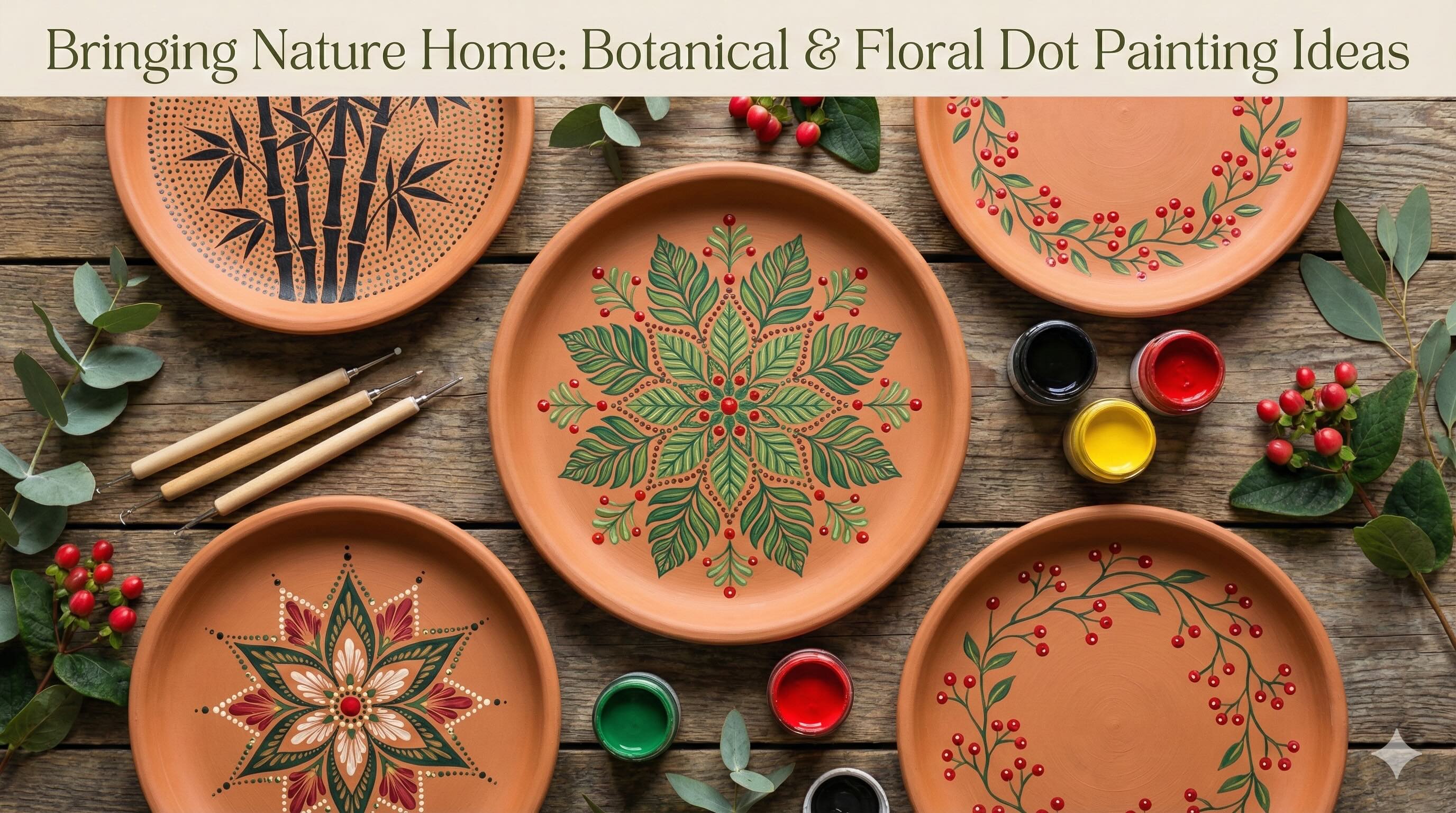
Bringing Nature Home: 5 Botanical & Floral Dot Painting Ideas for Terracotta
In the world of interior design, there is a concept known as Biophilic Design. Simply put, it is the practice of connecting people and nature within our built environments and communities. We see it in the explosion of houseplant popularity, the...
- 0
- 276

Perfect Dots Every Time: Best Paints, Tools & Techniques for Terracotta
If you have read our previous guides on Mandalas or Botanical Designs, you might have felt inspired to pick up a dotting tool and try it yourself. But if you have ever tried painting directly onto a raw terracotta plate, you likely enc...
- 0
- 387

Mandala Magic: Mastering Symmetrical Dot Art on Terracotta Plates
There is something undeniably hypnotic about a mandala. The word itself comes from Sanskrit, meaning "circle," and represents wholeness, eternity, and the universe. When applied to home decor—specifically through the technique of dot painting on...
- 0
- 330